
Buying Guide
Our Guide to the Best Riding Lawn Mowers
Best Riding Lawn Mowers compared by mower class, handling, property fit, ownership cost, maintenance, and service support.
By Gardening Is Ezee Editors
11 min read4 products evaluated
Riding mower roundups often compare deck size and horsepower while mixing tractors, rear-engine riders, zero-turns, and battery machines as if they solve the same access and handling problems. We separated the formats and focused on total ownership, property access, storage, and service rather than speed alone.
We compare mower format, yard fit, handling, power workflow, maintenance, storage, and long-term ownership needs so you can narrow the shortlist without paying for capacity you will not use.
Gardening Is Ezee field notes
The Garden Fit Check
A quick way to connect the shortlist to the space, workload and ownership details that matter after the box arrives.
- Start with the job
- Greenworks 60V 30-Inch Riding Mower leads this shortlist for small properties needing a compact battery rider. Use that fit as a reference point, then compare the alternatives against your own space and workload.
- Specs that separate the picks
- The first details to compare are 30-inch deck, 46-inch deck, 42-inch deck. Confirm the exact model and included components before ordering.
- Trade-off to plan for
- The 30-inch deck trades cutting speed for easier gate, shed, and trailer access.
The Practical Shortlist
A garden-first look at 4 options, organized around the job each one suits best.

Best Overall
Greenworks 60V 30-Inch Riding Mower
small properties needing a compact battery rider
Our take Check price for Greenworks 60V 30-Inch Riding Mower (opens in a new tab)

Best Alternative
Husqvarna TS 146 Lawn Tractor
buyers who want a conventional tractor and attachment path
Our take Check price for Husqvarna TS 146 Lawn Tractor (opens in a new tab)

Best for a Different Use
EGO Power+ TR4204 42-Inch Lawn Tractor
buyers replacing a gas tractor with a battery platform
Our take Check price for EGO Power+ TR4204 42-Inch Lawn Tractor (opens in a new tab)
Also Consider
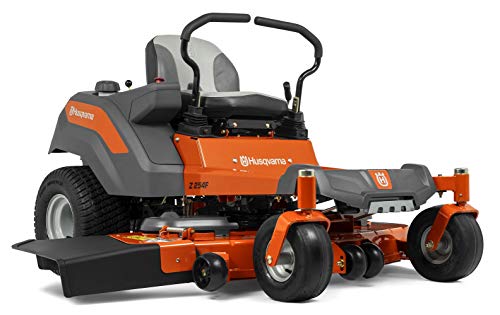
Husqvarna Z254F 54-Inch Zero-Turn Mower
larger open lawns where maneuvering speed matters
Our take Check price for Husqvarna Z254F 54-Inch Zero-Turn Mower (opens in a new tab)
| Pick | Best for | Key spec | Price |
|---|---|---|---|
| small properties needing a compact battery rider | 30-inch deck | Check price for Greenworks 60V 30-Inch Riding Mower (opens in a new tab) |
| buyers who want a conventional tractor and attachment path | 46-inch deck | Check price for Husqvarna TS 146 Lawn Tractor (opens in a new tab) |
| buyers replacing a gas tractor with a battery platform | 42-inch deck | Check price for EGO Power+ TR4204 42-Inch Lawn Tractor (opens in a new tab) |
| larger open lawns where maneuvering speed matters | 54-inch deck | Check price for Husqvarna Z254F 54-Inch Zero-Turn Mower (opens in a new tab) |
Why Each Pick Made the Cut
Best Overall1 of 4
Greenworks 60V 30-Inch Riding Mower on Amazon (opens in a new tab)
Choose Greenworks 60V 30-Inch Riding Mower for 30-inch deck.
Best for
- small properties needing a compact battery rider
Why it made the shortlist
Greenworks 60V 30-Inch Riding Mower is positioned for small properties needing a compact battery rider. The documented setup centers on 30-inch deck, 1,920Wh included battery capacity, up to 1.25-acre claim.
The feature doing most of the work here is 30-inch deck. Against the other 3 picks, the useful comparison starts with 30-inch deck and 1,920Wh included battery capacity. Those details show whether its configuration suits the job better than a neighboring recommendation.
The practical constraint here is the 30-inch deck trades cutting speed for easier gate, shed, and trailer access. Confirm the exact model number and included components before ordering. Check dimensions, compatibility and maintenance needs against the way you plan to use and store it.
Key dimensions & specs
- 30-inch deck
- 1,920Wh included battery capacity
- Up to 1.25-acre claim
- Compared using published specifications, included components, compatibility, and practical trade-offs.
Pros
- 30-inch deck
- 1,920Wh included battery capacity
- Up to 1.25-acre claim
Cons
- The 30-inch deck trades cutting speed for easier gate, shed, and trailer access.
- Check storage space, maintenance needs, and local service access before buying.
Best Alternative2 of 4
Husqvarna TS 146 Lawn Tractor on Amazon (opens in a new tab)
Husqvarna TS 146 Lawn Tractor makes the shortlist because 46-inch deck.
Best for
- buyers who want a conventional tractor and attachment path
Why it made the shortlist
This model is aimed at buyers who want a conventional tractor and attachment path. The documented setup centers on 46-inch deck, 22HP Briggs engine, lawn tractor layout.
The most useful documented advantage is 46-inch deck. Against the other 3 picks, the useful comparison starts with 46-inch deck and 22HP Briggs engine. Those details show whether its configuration suits the job better than a neighboring recommendation.
The main limitation to plan around is delivery width, storage space, and local dealer support need checking before purchase. Confirm the exact model number and included components before ordering. Check dimensions, compatibility and maintenance needs against the way you plan to use and store it.
Key dimensions & specs
- 46-inch deck
- 22HP Briggs engine
- Lawn tractor layout
- Dealer-serviceable platform
Pros
- 46-inch deck
- 22HP Briggs engine
- Lawn tractor layout
Cons
- Delivery width, storage space, and local dealer support need checking before purchase.
- Check storage space, maintenance needs, and local service access before buying.
Best for a Different Use3 of 4
EGO Power+ TR4204 42-Inch Lawn Tractor on Amazon (opens in a new tab)
EGO Power+ TR4204 42-Inch Lawn Tractor makes the shortlist because 42-inch deck.
Best for
- buyers replacing a gas tractor with a battery platform
Why it made the shortlist
This model is aimed at buyers replacing a gas tractor with a battery platform. The documented setup centers on 42-inch deck, battery riding platform, tractor steering.
The most useful documented advantage is 42-inch deck. Against the other 3 picks, the useful comparison starts with 42-inch deck and battery riding platform. Those details show whether its configuration suits the job better than a neighboring recommendation.
The main limitation to plan around is runtime varies with grass load, terrain, drive speed, and blade speed. Confirm the exact model number and included components before ordering. Check dimensions, compatibility and maintenance needs against the way you plan to use and store it.
Key dimensions & specs
- 42-inch deck
- Battery riding platform
- Tractor steering
- Battery-and-charger kit
Pros
- 42-inch deck
- Battery riding platform
- Tractor steering
Cons
- Runtime varies with grass load, terrain, drive speed, and blade speed.
- Check storage space, maintenance needs, and local service access before buying.
Also Consider4 of 4
Husqvarna Z254F 54-Inch Zero-Turn Mower on Amazon (opens in a new tab)
The strongest case for Husqvarna Z254F 54-Inch Zero-Turn Mower is 54-inch deck.
Best for
- larger open lawns where maneuvering speed matters
Why it made the shortlist
For larger open lawns where maneuvering speed matters, this is one of the more relevant configurations in the shortlist. The documented setup centers on 54-inch deck, 23HP Kawasaki engine, hydrostatic zero-turn drive.
Its case starts with 54-inch deck. Against the other 3 picks, the useful comparison starts with 54-inch deck and 23HP Kawasaki engine. Those details show whether its configuration suits the job better than a neighboring recommendation.
The trade-off worth checking first is a 54-inch zero-turn needs substantial storage and is not the default choice for slopes. Confirm the exact model number and included components before ordering. Check dimensions, compatibility and maintenance needs against the way you plan to use and store it.
Key dimensions & specs
- 54-inch deck
- 23HP Kawasaki engine
- Hydrostatic zero-turn drive
- Residential class
Pros
- 54-inch deck
- 23HP Kawasaki engine
- Hydrostatic zero-turn drive
Cons
- A 54-inch zero-turn needs substantial storage and is not the default choice for slopes.
- Check storage space, maintenance needs, and local service access before buying.
How We Built This Shortlist
Each pick was assessed across 4 criteria weighted for real-world use.
- Yard and mower fit
- We matched mower class, deck width, access, terrain, storage, and operator effort before comparing headline power or speed.
- Handling and daily use
- Turning room, propulsion, control layout, bag handling, boundary work, and cleaning all affect how manageable a mower feels week after week.
- Power workflow
- We considered fuel, cords, included battery capacity, charging, drive load, and the interruptions each power source can add to a mowing session.
- Maintenance and ownership cost
- We included blades, belts, filters, tires, batteries, winter storage, delivery, service access, and likely replacement cycles.
What Matters Before You Choose a Riding Lawn Mower
Key buying criteria so you get the right fit the first time.
Mower class first
Choose a tractor for attachments and familiar steering, a zero-turn for open-lawn maneuvering, or a compact rider when gates and storage are the constraint.
Getting this wrong is one of the more common reasons a lawn mowers riding purchase disappoints once it actually arrives, since mower class first affects real day-to-day use in a way marketing photos and bullet points don't always make obvious.
Deck and total width
Measure the narrowest gate, shed door, trailer, and storage aisle. Leave clearance beyond the advertised deck width because chutes and tires can extend farther.
This is the kind of detail that looks minor in a spec list but shapes how satisfied you actually are with a lawn mowers riding weeks after buying, since deck and total width plays out differently in daily use than it does on paper.
Terrain and braking
Use only slopes allowed by the manufacturer. Traction, stopping, and safe turning matter more than a top-speed claim.
Compare how each lawn mowers riding in this roundup actually handles terrain and braking rather than assuming they're interchangeable on this point, since the listings here differ on it more than the headline specs suggest.
Ride and control reach
Check step-over height, seat support, pedal or lap-bar reach, and vibration exposure before buying a machine you will use for an hour at a time.
Ride and control reach is easy to overlook next to flashier specs, but it's frequently the difference between a lawn mowers riding that fits your routine and one that quietly becomes a hassle.
Delivered ownership cost
Getting this wrong is one of the more common reasons a lawn mowers riding purchase disappoints once it actually arrives, since delivered ownership cost affects real day-to-day use in a way marketing photos and bullet points don't always make obvious.
Match a Riding Lawn Mower to Your Garden or Yard
Match the Property Before the Brand
| Buyer situation | Recommended direction |
|---|---|
| Small or access-constrained lawn | Greenworks 60V 30-Inch Riding Mower |
| Medium maintained lawn | Husqvarna TS 146 Lawn Tractor |
| Large or specialized property | EGO Power+ TR4204 42-Inch Lawn Tractor |
| Steep or safety-sensitive terrain | Follow the exact manufacturer slope guidance before selecting any mower |
Choose the Right Mower Format
- Walk-behind
- Best for smaller or detailed lawns where compact storage, easy trimming, and control around obstacles matter.
- Riding or zero-turn
- Best for larger properties when deck width, seating comfort, safe terrain handling, and transport space are already accounted for.
- Robot
- Best for frequent automated maintenance when the yard supports reliable navigation and the owner accepts setup, edge trimming, and seasonal care.
Real Ownership Checklist
| Cost or task | Verify before buying |
|---|---|
| Power | Fuel, battery watt-hours, extra packs, charger, and circuit needs |
| Wear parts | Blades, belts, filters, tires, and model-specific availability |
| Logistics | Delivered width, gate, shed, trailer, and service transport |
| Support | Residential/commercial warranty and nearest authorized service |
Comfort and Workload Checklist
- During mowing
- Consider starting steps, control reach, push or drive effort, turning room, noise, and how often the mower needs attention.
- After mowing
- Check bag removal, deck cleaning, charging or refueling, folding, storage footprint, and access to routine service parts.
Before You Bring One Home
What should I check before buying lawn mowers riding?
Measure mowable area, narrowest access point, storage, terrain, and slope first. Then compare mower class, complete operating weight, power workflow, service access, and delivered ownership cost.
Can I trust voltage, horsepower, or deck width alone?
No. Voltage is not battery capacity, horsepower does not establish cut quality or transmission durability, and deck width does not include every part that must pass through a gate or fit on a trailer.
Which mower type is easiest to live with?
For a small flat lawn, a light battery or corded walk-behind is usually simplest. Self-propel helps on slopes, riding mowers reduce walking on large properties, and robots reduce routine mowing time but add setup and edge work.
When should I move from a push mower to self-propelled, riding, or robotic?
Choose self-propel when slopes or mower weight make pushing tiring. Consider riding for large open lawns and long sessions. Consider a robot when the yard supports dependable navigation and frequent automated cuts matter more than a perfectly finished edge.
How should I compare long-term cost?
Confirm the model number, dimensions, capacity, included components, compatibility, warranty coverage and storage requirements.
Bottom Line
Best overall: Greenworks 60V 30-Inch Riding Mower — best overall pick in this roundup. See the full verdicts above for every pick, with pros, cons and who each one suits.
Browse all riding lawn mowers on Amazon — Prime-eligible options with current pricing.