
Buying Guide
Our Guide to the Best Push Lawn Mowers
Best Push Lawn Mowers compared by mower class, handling, property fit, ownership cost, maintenance, and service support.
By Gardening Is Ezee Editors
11 min read4 products evaluated
Push mower lists commonly mix reel, corded, battery, and gas machines without explaining how different their effort and maintenance demands are. We organized these picks by power source and highlighted ready-to-mow weight, turning, bag handling, and the point where self-propel becomes the better choice.
We compare mower format, yard fit, handling, power workflow, maintenance, storage, and long-term ownership needs so you can narrow the shortlist without paying for capacity you will not use.
Gardening Is Ezee field notes
The Garden Fit Check
A quick way to connect the shortlist to the space, workload and ownership details that matter after the box arrives.
- Start with the job
- American Lawn Mower 1204-14 Reel Mower leads this shortlist for small, regularly maintained flat lawns. Use that fit as a reference point, then compare the alternatives against your own space and workload.
- Specs that separate the picks
- The first details to compare are 14-inch cut, 16-inch deck, 21-inch steel deck. Confirm the exact model and included components before ordering.
- Trade-off to plan for
- A narrow reel mower demands more passes and struggles when grass is allowed to grow tall.
The Practical Shortlist
A garden-first look at 4 options, organized around the job each one suits best.
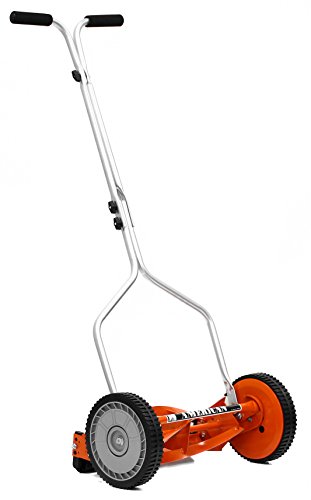
Best Overall
American Lawn Mower 1204-14 Reel Mower
small, regularly maintained flat lawns
Our take Check price for American Lawn Mower 1204-14 Reel Mower (opens in a new tab)
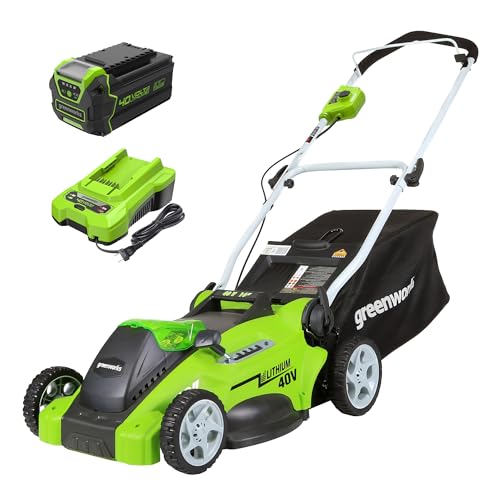
Best Alternative
Greenworks 40V 16-Inch Push Mower
small lawns and buyers already using Greenworks 40V tools
Our take Check price for Greenworks 40V 16-Inch Push Mower (opens in a new tab)

Best for a Different Use
PowerSmart EasyGlide 21-Inch Gas Push Mower
buyers wanting a full-width gas push mower without self-propel
Our take Check price for PowerSmart EasyGlide 21-Inch Gas Push Mower (opens in a new tab)
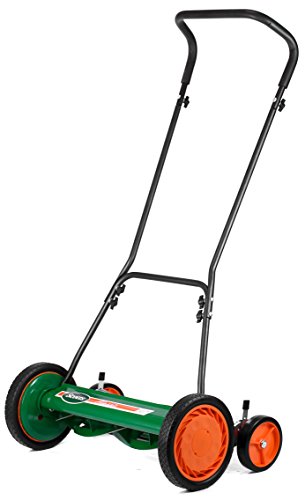
Also Consider
Scotts 2000-20S Reel Mower
flat lawns where a wider manual cut reduces passes
Our take Check price for Scotts 2000-20S Reel Mower (opens in a new tab)
| Pick | Best for | Key spec | Price |
|---|---|---|---|
| small, regularly maintained flat lawns | 14-inch cut | Check price for American Lawn Mower 1204-14 Reel Mower (opens in a new tab) |
| small lawns and buyers already using Greenworks 40V tools | 16-inch deck | Check price for Greenworks 40V 16-Inch Push Mower (opens in a new tab) |
| buyers wanting a full-width gas push mower without self-propel | 21-inch steel deck | Check price for PowerSmart EasyGlide 21-Inch Gas Push Mower (opens in a new tab) |
| flat lawns where a wider manual cut reduces passes | 20-inch cut | Check price for Scotts 2000-20S Reel Mower (opens in a new tab) |
Why Each Pick Made the Cut
Best Overall1 of 4
American Lawn Mower 1204-14 Reel Mower on Amazon (opens in a new tab)
American Lawn Mower 1204-14 Reel Mower is the better fit when small, regularly maintained flat lawns.
Best for
- small, regularly maintained flat lawns
Why it made the shortlist
The intended use case is small, regularly maintained flat lawns. The documented setup centers on 14-inch cut, four-blade reel, no fuel or battery.
What separates it on paper is 14-inch cut. Against the other 3 picks, the useful comparison starts with 14-inch cut and four-blade reel. Those details show whether its configuration suits the job better than a neighboring recommendation.
Before committing, account for a narrow reel mower demands more passes and struggles when grass is allowed to grow tall. Confirm the exact model number and included components before ordering. Check dimensions, compatibility and maintenance needs against the way you plan to use and store it.
Key dimensions & specs
- 14-inch cut
- Four-blade reel
- No fuel or battery
- Manual push
Pros
- 14-inch cut
- Four-blade reel
- No fuel or battery
Cons
- A narrow reel mower demands more passes and struggles when grass is allowed to grow tall.
- Check storage space, maintenance needs, and local service access before buying.
Best Alternative2 of 4
Greenworks 40V 16-Inch Push Mower on Amazon (opens in a new tab)
Greenworks 40V 16-Inch Push Mower is the better fit when small lawns and buyers already using Greenworks 40V tools.
Best for
- small lawns and buyers already using Greenworks 40V tools
Why it made the shortlist
The intended use case is small lawns and buyers already using Greenworks 40V tools. The documented setup centers on 16-inch deck, 40V 4Ah battery, 160Wh included energy.
What separates it on paper is 16-inch deck. Against the other 3 picks, the useful comparison starts with 16-inch deck and 40V 4Ah battery. Those details show whether its configuration suits the job better than a neighboring recommendation.
Before committing, account for the narrow deck and single included pack limit productivity on larger or overgrown lawns. Confirm whether the battery and charger are included with the exact package. Check platform compatibility and published runtime against the area or workload you need to cover.
Key dimensions & specs
- 16-inch deck
- 40V 4Ah battery
- 160Wh included energy
- Push drive
Pros
- 16-inch deck
- 40V 4Ah battery
- 160Wh included energy
Cons
- The narrow deck and single included pack limit productivity on larger or overgrown lawns.
- Check storage space, maintenance needs, and local service access before buying.
Best for a Different Use3 of 4
PowerSmart EasyGlide 21-Inch Gas Push Mower on Amazon (opens in a new tab)
PowerSmart EasyGlide 21-Inch Gas Push Mower makes the shortlist because 21-inch steel deck.
Best for
- buyers wanting a full-width gas push mower without self-propel
Why it made the shortlist
This model is aimed at buyers wanting a full-width gas push mower without self-propel. The documented setup centers on 21-inch steel deck, 144cc gas engine, 3-in-1 cutting modes.
The most useful documented advantage is 21-inch steel deck. Against the other 3 picks, the useful comparison starts with 21-inch steel deck and 144cc gas engine. Those details show whether its configuration suits the job better than a neighboring recommendation.
The main limitation to plan around is check storage space, maintenance needs, and local service access before buying. Confirm the exact model number and included components before ordering. Check dimensions, compatibility and maintenance needs against the way you plan to use and store it.
Key dimensions & specs
- 21-inch steel deck
- 144cc gas engine
- 3-in-1 cutting modes
- Push drive
Pros
- 21-inch steel deck
- 144cc gas engine
- 3-in-1 cutting modes
Cons
- Check storage space, maintenance needs, and local service access before buying.
Also Consider4 of 4
Scotts 2000-20S Reel Mower on Amazon (opens in a new tab)
The strongest case for Scotts 2000-20S Reel Mower is 20-inch cut.
Best for
- flat lawns where a wider manual cut reduces passes
Why it made the shortlist
For flat lawns where a wider manual cut reduces passes, this is one of the more relevant configurations in the shortlist. The documented setup centers on 20-inch cut, five-blade reel, manual push.
Its case starts with 20-inch cut. Against the other 3 picks, the useful comparison starts with 20-inch cut and five-blade reel. Those details show whether its configuration suits the job better than a neighboring recommendation.
The trade-off worth checking first is the wide reel takes steady pushing force and works best when grass is cut frequently rather than allowed to grow tall. Confirm the exact model number and included components before ordering. Check dimensions, compatibility and maintenance needs against the way you plan to use and store it.
Key dimensions & specs
- 20-inch cut
- Five-blade reel
- Manual push
- No ongoing fuel cost
Pros
- 20-inch cut
- Five-blade reel
- Manual push
Cons
- The wide reel takes steady pushing force and works best when grass is cut frequently rather than allowed to grow tall.
- Check storage space, maintenance needs, and local service access before buying.
How We Built This Shortlist
Each pick was assessed across 4 criteria weighted for real-world use.
- Yard and mower fit
- We matched mower class, deck width, access, terrain, storage, and operator effort before comparing headline power or speed.
- Handling and daily use
- Turning room, propulsion, control layout, bag handling, boundary work, and cleaning all affect how manageable a mower feels week after week.
- Power workflow
- We considered fuel, cords, included battery capacity, charging, drive load, and the interruptions each power source can add to a mowing session.
- Maintenance and ownership cost
- We included blades, belts, filters, tires, batteries, winter storage, delivery, service access, and likely replacement cycles.
What Matters Before You Choose a Push Lawn Mower
Key buying criteria so you get the right fit the first time.
Power source changes effort
A reel mower has no motor weight but needs consistent forward force; gas adds fuel and starting work; battery reduces maintenance; corded models add cable management.
Getting this wrong is one of the more common reasons a push lawn mowers purchase disappoints once it actually arrives, since power source changes effort affects real day-to-day use in a way marketing photos and bullet points don't always make obvious.
Ready-to-mow weight
Published bare-tool weight can omit the battery, fuel, and grass bag. Compare the complete mowing configuration and the weight of a full bag.
This is the kind of detail that looks minor in a spec list but shapes how satisfied you actually are with a push lawn mowers weeks after buying, since ready-to-mow weight plays out differently in daily use than it does on paper.
Push and pullback force
Flat-ground rolling does not predict effort on slopes, thick grass, or tight pullbacks. Buyers with limited strength should favor self-propel when these conditions are common.
Compare how each push lawn mowers in this roundup actually handles push and pullback force rather than assuming they're interchangeable on this point, since the listings here differ on it more than the headline specs suggest.
Deck width vs turning
A wider deck reduces passes but takes more force to turn and trim around beds. Narrow decks suit small irregular lawns despite requiring more walking.
Deck width vs turning is easy to overlook next to flashier specs, but it's frequently the difference between a push lawn mowers that fits your routine and one that quietly becomes a hassle.
Bag removal
Check lift height, handle placement, and how far the bag must be pulled before it clears the frame. Wet clippings can make an already awkward bag substantially heavier.
Getting this wrong is one of the more common reasons a push lawn mowers purchase disappoints once it actually arrives, since bag removal affects real day-to-day use in a way marketing photos and bullet points don't always make obvious.
Match a Push Lawn Mower to Your Garden or Yard
Match the Property Before the Brand
| Buyer situation | Recommended direction |
|---|---|
| Small or access-constrained lawn | American Lawn Mower 1204-14 Reel Mower |
| Medium maintained lawn | Greenworks 40V 16-Inch Push Mower |
| Large or specialized property | PowerSmart EasyGlide 21-Inch Gas Push Mower |
| Steep or safety-sensitive terrain | Follow the exact manufacturer slope guidance before selecting any mower |
Choose the Right Mower Format
- Walk-behind
- Best for smaller or detailed lawns where compact storage, easy trimming, and control around obstacles matter.
- Riding or zero-turn
- Best for larger properties when deck width, seating comfort, safe terrain handling, and transport space are already accounted for.
- Robot
- Best for frequent automated maintenance when the yard supports reliable navigation and the owner accepts setup, edge trimming, and seasonal care.
Real Ownership Checklist
| Cost or task | Verify before buying |
|---|---|
| Power | Fuel, battery watt-hours, extra packs, charger, and circuit needs |
| Wear parts | Blades, belts, filters, tires, and model-specific availability |
| Logistics | Delivered width, gate, shed, trailer, and service transport |
| Support | Residential/commercial warranty and nearest authorized service |
Comfort and Workload Checklist
- During mowing
- Consider starting steps, control reach, push or drive effort, turning room, noise, and how often the mower needs attention.
- After mowing
- Check bag removal, deck cleaning, charging or refueling, folding, storage footprint, and access to routine service parts.
Before You Bring One Home
What should I check before buying push lawn mowers?
Measure mowable area, narrowest access point, storage, terrain, and slope first. Then compare mower class, complete operating weight, power workflow, service access, and delivered ownership cost.
Can I trust voltage, horsepower, or deck width alone?
No. Voltage is not battery capacity, horsepower does not establish cut quality or transmission durability, and deck width does not include every part that must pass through a gate or fit on a trailer.
Which mower type is easiest to live with?
For a small flat lawn, a light battery or corded walk-behind is usually simplest. Self-propel helps on slopes, riding mowers reduce walking on large properties, and robots reduce routine mowing time but add setup and edge work.
When should I move from a push mower to self-propelled, riding, or robotic?
Choose self-propel when slopes or mower weight make pushing tiring. Consider riding for large open lawns and long sessions. Consider a robot when the yard supports dependable navigation and frequent automated cuts matter more than a perfectly finished edge.
How should I compare long-term cost?
Confirm the model number, dimensions, capacity, included components, compatibility, warranty coverage and storage requirements.
Bottom Line
Best overall: American Lawn Mower 1204-14 Reel Mower — best overall pick in this roundup. See the full verdicts above for every pick, with pros, cons and who each one suits.
Browse all push lawn mowers on Amazon — Prime-eligible options with current pricing.