
Practical Garden Guide
Raised Bed vs Elevated Planter: What’s the Difference?
One usually connects to the soil below; the other supports a contained growing box above ground.
By Gardening Is Ezee EditorsUpdated 16 min read
Quick answer: A raised bed usually holds soil above ground and may remain open to the native soil below. An elevated planter supports a contained growing box on legs or a stand. The distinction affects rooting depth, drainage, structural load, accessibility, mobility, and what crops fit comfortably.
This guide is designed for a homeowner making a real diagnosis or purchase, not for a laboratory test. Conditions vary with climate, water supply, plants, equipment, and maintenance. Use the measurements described here as observations from your own setup, follow product manuals, and involve a qualified professional whenever structural, electrical, plumbing, tree-work, or personal-safety risks exceed routine garden maintenance.
The decision in one minute
The central comparison is ground-connected and fully supported growing systems. Begin with the job, site, and routine. Then eliminate options that do not meet compatibility or safety requirements. Only after that should price, appearance, bundled accessories, and review scores decide between finalists.
Use three questions. What result must the setup produce? What is the most difficult normal condition it must handle? What maintenance will you realistically perform? Honest answers prevent overbuying for an imagined extreme and underbuying for the task that occurs every week.
The right choice is not necessarily the option with the largest number on its box. It is the option that fits the complete system. Every connection, container, frame, blade, wheel, battery, or watering device interacts with the parts around it. A single incompatible part can make an otherwise capable product feel defective.
What the terms actually mean
Marketing categories compress many design differences into a short label. Two products in the same category may differ in dimensions, materials, tolerances, working capacity, repair parts, and instructions. Compare the exact model specification, not an assumption based on the category name.
Separate capacity from performance. Capacity describes what a product can hold, reach, or power under stated conditions. Performance describes the result in your setting. A larger capacity can be helpful, but it can also add weight, occupy space, increase drying time, or demand more maintenance. The useful target is adequate capacity with a comfortable margin.
Also separate a symptom from its cause. A weak stream, dry bed, bad smell, rough cut, unstable load, or short runtime is evidence, not a diagnosis. Write down where and when it happens. Compare a simple baseline with the full setup. This habit prevents a plausible story from becoming an unnecessary purchase.
Main options compared
| Option | Usually fits | What to verify |
|---|---|---|
| Open-Bottom Raised Bed | Best when this describes the actual site or routine | Verify capacity, fit, safety guidance, and maintenance before buying |
| Deep Elevated Planter | Best when this describes the actual site or routine | Verify capacity, fit, safety guidance, and maintenance before buying |
| Shallow Elevated Trough | Best when this describes the actual site or routine | Verify capacity, fit, safety guidance, and maintenance before buying |
| Accessible Tabletop Planter | Best when this describes the actual site or routine | Verify capacity, fit, safety guidance, and maintenance before buying |
This table is a screening tool, not a universal ranking. Cross out an option when it cannot meet a non-negotiable requirement. If two remain, compare the full cost of ownership: required accessories, replacement parts, storage, setup time, maintenance, and the likelihood that you will actually use it.
Measure the site before shopping
Start with dimensions and routes. Measure the real path around corners, gates, furniture, beds, slopes, and steps. Note the narrowest opening and the place where the equipment will be stored. If a task happens above ground, record working height and comfortable reach without stretching or standing on an unstable support.
Then record operating conditions. Sun, wind, temperature, rainfall, surface roughness, water availability, outlet location, and exposure to children or pets can change the suitable design. Take photographs and keep the measurements in your phone. Product listings are easier to evaluate when every attractive feature must answer a known requirement.
Finally, measure the workload. Count containers, estimate weekly material volume, time a watering run, measure representative branches, weigh a typical bag, or note the lawn area. Use ordinary and demanding days, not an imaginary maximum. A small tool used twice may be preferable to a large tool that is difficult to store every day.
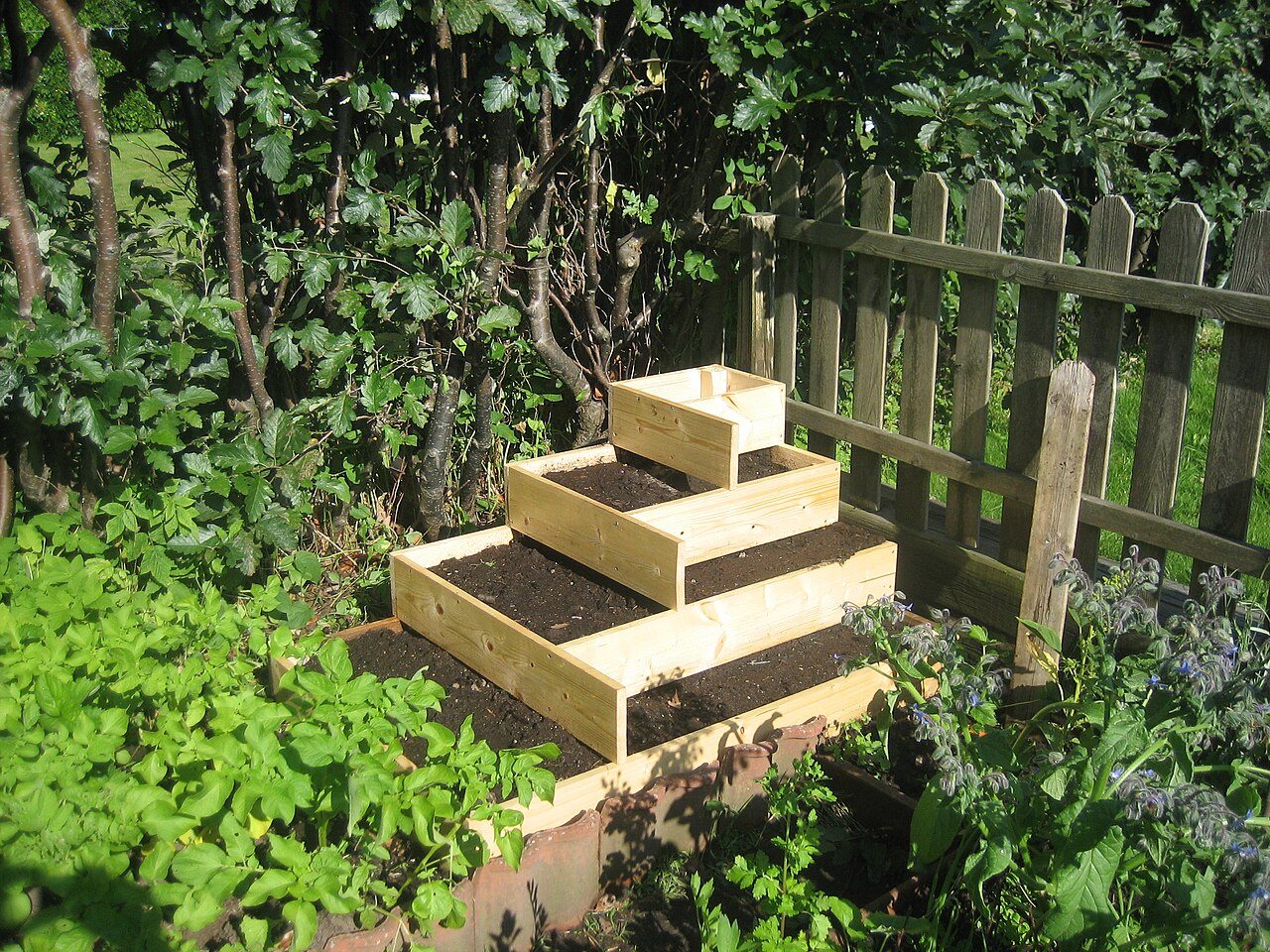
A raised vegetable bed showing the usable growing area and working height. Photo: Kerstin Namuth, CC BY-SA 4.0 via Wikimedia Commons.

Related Gardening Is Ezee guides
Sources and further reading
- Oregon State University Extension: Raised Bed Gardening
- Oregon State University Extension: Improving Garden Soils with Organic Matter
Final checklist
Define the result, measure the site, identify the hardest normal condition, read the exact manual, compare compatible options, include accessories in the cost, test during the return window, and create a maintenance plan. For raised bed vs elevated planter, the best answer is the setup that solves the measured problem reliably without adding avoidable complexity.
Field notes for a better real-world result
A controlled comparison does not have to be elaborate. Photograph the starting condition, write down the setting, complete one normal cycle, and photograph the result from the same position. If you change two things at once, you may improve the outcome but will not know which change mattered. That uncertainty makes the next problem harder to solve.
Weather and season belong in the record. Heat, wind, freezing conditions, rainfall, plant growth, and frequency of use can turn an adequate setup into a marginal one. Revisit the decision when the demanding season arrives rather than assuming a spring test represents the whole year.
The final test should include cleanup and storage. Time the complete routine, not only the active task. If an item saves five minutes of work but adds ten minutes of awkward winding, washing, charging, or lifting, the total system has not become easier. This is why handling and storage deserve space in a buying guide.
A simple scoring worksheet
Score each candidate from one to five for compatibility, working capacity, handling, maintenance, storage, service, and total cost. Multiply compatibility and safety-related categories by two. Reject any option that fails a mandatory requirement even if its total score looks attractive. Keep short notes beside every score so the ranking remains explainable. Apply the same standard to raised bed vs elevated planter and note any assumption that still needs confirmation. A transparent unknown is safer than a confident guess.
Questions to ask a seller
Ask for the exact model manual, capacity conditions, included components, replacement-part numbers, warranty exclusions, and the procedure for obtaining service. If the answer relies on a category-wide promise rather than the model documentation, treat the specification as unknown. Save written replies with the order confirmation. Apply the same standard to raised bed vs elevated planter and note any assumption that still needs confirmation. A transparent unknown is safer than a confident guess.
Return-window test
Inspect for shipping damage, verify every included part, assemble only as instructed, and run an ordinary low-risk task before discarding packaging. Do not deliberately overload or misuse the product. Document leaks, binding, imbalance, fit problems, unusual heat, or missing parts immediately and contact the seller or manufacturer. Apply the same standard to raised bed vs elevated planter and note any assumption that still needs confirmation. A transparent unknown is safer than a confident guess.
Sustainability check
Durability, repairability, correct sizing, and shared accessories can reduce waste. Buy a platform or product only when its useful life and parts support justify the commitment. Clean and store it properly, donate a serviceable item you no longer need, and use an authorized recycler for batteries or materials that require special handling. Apply the same standard to raised bed vs elevated planter and note any assumption that still needs confirmation. A transparent unknown is safer than a confident guess.